Yash Mehta


I’m a grad student in Computational Cognitive Science, working with Mick Bonner, studying representations in biological and artificial neural networks. My research investigates how brains and AI systems learn to internally represent information. More recently, my research has been focused on AI agents for neuroscientific discovery from large datasets (e.g. research internships at Microsoft Research and Sakana AI). My background is in CS, and I previously wrote code as a developer at Amazon. I’m excited about open-ended research, AI (and what aspects of work to offload to it without losing your core cognitive abilities like thinking or curiosity), traveling (experiences!), swim/bike training (david goggins 🙏🏻), and coffee ☕ I have also built the following tools:
Academia
Johns Hopkins University
PhD student
Computational Cognitive Science
2023 – present
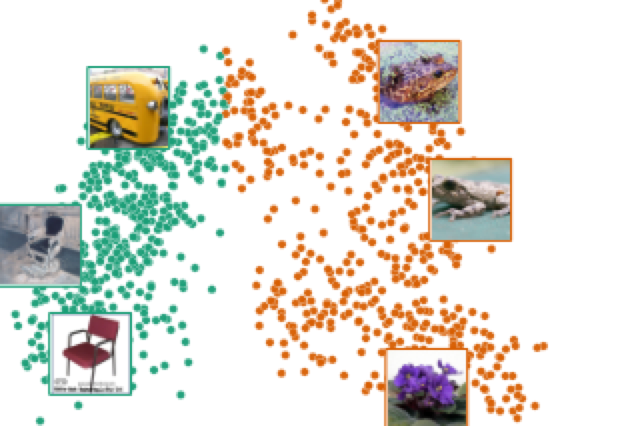
I study how brains and deep networks come to represent visual information, with a focus on computational models of visual processing. One line of work shows that vision models trained on extremely coarse objectives, as few as eight classes, still learn representations aligned with human judgments and visual cortex. I also build closed-loop AI systems for neuroscientific discovery, in which models propose, evaluate and refine hypotheses on neural data.
Paper from this work
HHMI Janelia Research Campus
Research Engineer 2
Jan 2022 – Sep 2023
I worked directly with experimental neuroscientists to build connectome-constrained neural network models that can be fit end to end to recorded data. I used the framework to infer synaptic plasticity rules from learning dynamics. It recovered known rules and identified active forgetting in fly reward-learning data.
Paper from this work

University of Freiburg
ML Research Engineer
Machine Learning Lab
Aug 2020 – Dec 2021
I implemented and benchmarked neural architecture search algorithms across vision, NLP, speech and detection. I built a unified interface for evaluating new search methods across datasets and search spaces, released as NAS-Bench-Suite in the open-source NASLib. With it we showed that conclusions drawn from a few benchmarks often do not carry over to others.
Paper from this work

Gatsby Computational Neuroscience Unit
Research Resident
University College London
Jan 2019 – Jun 2020
I was the first Research Resident at Gatsby, working with Peter Latham and Tim Lillicrap on learning rules a brain could plausibly use. I implemented node perturbation and other local learning rules directly from their weight-update equations. I built efficient training code for per-weight updates and scaled it across GPUs, which made large experiments with these rules practical.


NTU Singapore
Undergraduate thesis
2018

For my undergraduate thesis I worked on predicting personality traits from text with language models. I combined psycholinguistic features with language-model embeddings to predict the Big Five traits. The work grew into a survey of deep learning for personality detection and several follow-up papers.
Papers from this work


Industry
Microsoft Research
Research Intern
Deep Learning team, Redmond
Apr 2026 – present

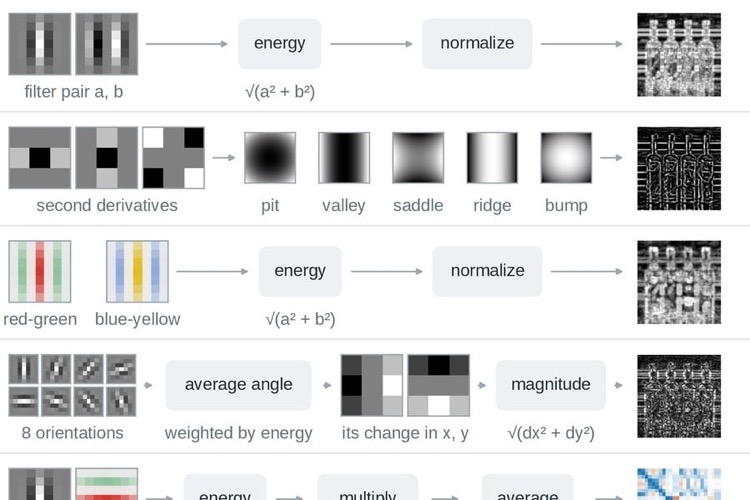
I led an open-ended search in which LLM agents write fixed, never-trained brain encoding models as code and improve them from held-out neural predictivity. The search ran across five datasets, two species and three recording modalities. The models it produces are readable programs, not black boxes.
Sakana AI
Research Intern
Summer 2025
I led IdeaBreeder, a system for open-ended generation of scientific ideas by evolutionary search. It grows trees of research hypotheses through structured LLM mutations. Each idea is reviewed in parallel for novelty, feasibility, usefulness and clarity.
Amazon
Software Development Engineer
Bangalore
Jul 2018 – Dec 2018
I built backend software and data pipelines for Amazon Music on AWS. I also built an LSTM system for music emotion classification that placed second in Amazon’s global ML hackathon. I left after six months to pursue research.
News
- New preprint out: interpretable weight-space programming, where an LLM agent hand-writes the weights of transformers and brain encoding models instead of training them with backprop! 🧠
- Feel that we shouldn’t be running behind citation counts, but still celebrating that my research was cited 1000 times! 🎉📚
- Joining Microsoft Research in Redmond as a research intern on the Deep Learning team for the summer of 2026! 🔬
- My project on coarse-grained training of deep neural networks selected as a talk (~10%) at VSS 2026! 👁️
- Recipient of the $10,000 Gemini Grant for Researchers award from Google! 🎉
- Attended NeurIPS 2025 in San Diego! 🌴
- Will be joining Sakana AI as a research scientist intern from summer 2025! 🗼🇯🇵
- Accepted into Y Combinator AI Startup School in SF for 2025! 🚀
- Our paper on inferring synaptic plasticity rules got accepted at NeurIPS 2024! 🏆
- Gave a talk on my work at Koita Center for Digital Health at IIT Bombay. 🇮🇳🎤
- Started at Harvard Medical School with Pranav Rajpurkar to work on knowledge graphs for automated radiology report generation 🏥
- Gave a talk on “Multimodal Foundation Models” at SenticLab in NTU Singapore! 🇸🇬
- Research visit to the Flatiron Institute and PolymathicAI team - multimodal foundation models for science!
- Attended ICML 2023 in Hawaii! 🏄🏻♂️🌸
- My application for US immigration has been approved under EB1A category - individual of outstanding ability! 🇺🇸
- Co-presented work on node perturbation at NeurIPS 2022 in New Orleans! ✨🎷
- 1 month as a student researcher in Larry Abbott’s lab at the Zuckerman Institute, Columbia University! 🗽
- Got Married!


- Our special issue “Future-generation personality prediction from digital footprints” was accepted at FGCS international journal! Managing guest editor 🤝
- Presented our NAS-BenchSuite paper on neural architecture search at ICLR’22.
- Started at HHMI Janelia Research Campus working on modeling synaptic plasticity with James Fitzgerald and Jan Funke 🪰
- Co-created attention and transformers module with Prof. Frank Hutter. Also served as TA for Deep Learning Lab, and Deep Learning MSc. courses.
- Joined the AutoML group with Frank Hutter at University of Freiburg, Germany, to work on neural architecture search.
- Joined Gatsby Unit, UCL in London as a Research Assistant working on biologically plausiblle credit assignment algorithms with Peter Latham and Tim Lillicrap (DeepMind)! ⚡️🙌🏼
- Started working at Amazon as a software development engineer in Bangalore.
- Graduated in Computer Science from BITS Pilani Goa! 🎓
- Started undergraduate research thesis with Erik Cambria on using large language models for personality trait prediction.